
As a PA fellow, much like a second year PA student, I have different rotations in all areas of ENT. My first rotation was in general outpatient ENT. I saw many ENT pathologies including: benign paroxysmal vertigo, dysphonia, epistaxis, cerumen impaction, acute hearing loss, nasal polyps, sinusitis, laryngitis, vocal nodules, and so much more. I learned a ton during this rotation, but I will continue to be part of the ENT clinic throughout my year, so I kind of got an introduction here.
My second rotation was Head and Neck surgery. This included me seeing patients in clinic for pre and post op follow ups, assisting in the OR, and rounding on patients admitted to our service every morning. I learned SO much during this first rotation. We had some very long surgeries.... like 14 hours. But they are some of the most amazing surgeries I have every seen.
My second rotation was Head and Neck surgery. This included me seeing patients in clinic for pre and post op follow ups, assisting in the OR, and rounding on patients admitted to our service every morning. I learned SO much during this first rotation. We had some very long surgeries.... like 14 hours. But they are some of the most amazing surgeries I have every seen.
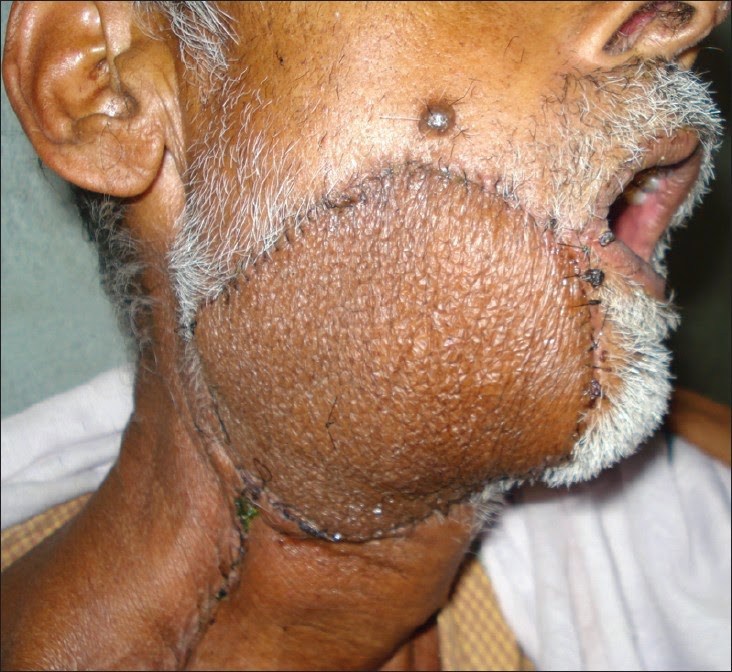 |
| An example of a flap reconstruction of the right cheek |
We work with a lot of head and neck cancer, and utilize flaps for head & neck reconstruction. These flaps typically are harvested from the anterior lateral thigh, radial forearm, or fibula and lateral leg. As part of the process the flap, along with an artery and vein, is harvested and reanastomosed with an artery and vein in the neck. This new flap is what repairs the defect made by resection of cancer.
This is truly life changing, as it can affect how the patient eats, swallow, smells, and especially how they look. I am always humbled when I get the opportunity to be part of these surgeries.
My third rotation was rhinology. I got to be part of some amazing surgeries during this rotation. I learned so much about nasal anatomy, and nasal obstruction. I got to see patients in clinic, and assist in the OR. We performed lots of different types of surgeries including: Septoplasty, turbinectomy, frontal sinus entrostomy, ethmoidectomy, resection of polyps, nasal valve surgery, rhinoplasty. I had no clue how much an individual's nose effects the look of their entire face. I learned to respect the ENT surgeons who are part of this sub-specialty as it is truly an art form. Most of our patients left home from the hospital as outpatient surgeries. However, we would have a patient every once in a while that would have to stay a night or two. In which case me and the resident would round on them, and make sure they had all their progress notes and orders in daily.
One great thing about being part of a fellowship is it has allowed me to learn how to do the little things like putting in orders, or how to dictate a note, honing my interviewing skills, and getting better at what questions to ask patients. The fellowship is allowing me to gain confidence in myself and my recommendations to patients. Each rotation builds on the next, and I feel I understand the principles of ENT a little bit better and more thorough than before. I have also got the chance to practice common ENT procedures including flexible nasopharyngoscopys, ridged rhinoscopys, trach replacements, prosthetic speaking valves, and microscopic cerumen impaction removal.
As part of the fellowship I go to weekly "core curriculum conferences" along with the residents. These conferences cover topics in ENT and help to serve as a foundation for ENT anatomy, pathology, and treatment plans. Surgical modalities, difficulties, and common mistakes are discussed. I always learn so much during these conferences. I also attend Sim lab trainings with the other PA fellow in the ENT program and PA fellows in the internal med program. These are always helpful, as they give us the chance to learn in a safe environment and learn from each other.
I also share first call about 4-5 times per month. It can be really taxing at times as you get calls all night, and sometimes get very little sleep. However it always provides some great learning experiences.
My next rotation is Oral Maxillofacial Surgery, then general outpatient ENT, followed by pediatric ENT. I cant believe how fast everything is going. I feel like I just started, but with all i've learned it feels like i've been here for years!
This is truly life changing, as it can affect how the patient eats, swallow, smells, and especially how they look. I am always humbled when I get the opportunity to be part of these surgeries.
My third rotation was rhinology. I got to be part of some amazing surgeries during this rotation. I learned so much about nasal anatomy, and nasal obstruction. I got to see patients in clinic, and assist in the OR. We performed lots of different types of surgeries including: Septoplasty, turbinectomy, frontal sinus entrostomy, ethmoidectomy, resection of polyps, nasal valve surgery, rhinoplasty. I had no clue how much an individual's nose effects the look of their entire face. I learned to respect the ENT surgeons who are part of this sub-specialty as it is truly an art form. Most of our patients left home from the hospital as outpatient surgeries. However, we would have a patient every once in a while that would have to stay a night or two. In which case me and the resident would round on them, and make sure they had all their progress notes and orders in daily.
One great thing about being part of a fellowship is it has allowed me to learn how to do the little things like putting in orders, or how to dictate a note, honing my interviewing skills, and getting better at what questions to ask patients. The fellowship is allowing me to gain confidence in myself and my recommendations to patients. Each rotation builds on the next, and I feel I understand the principles of ENT a little bit better and more thorough than before. I have also got the chance to practice common ENT procedures including flexible nasopharyngoscopys, ridged rhinoscopys, trach replacements, prosthetic speaking valves, and microscopic cerumen impaction removal.
 |
| An example of flexible nasopharyngoscopy |
 |
| An example of ridged rhinoscopy (notice the straight long scope vs the flexible scope in the above picture) |
As part of the fellowship I go to weekly "core curriculum conferences" along with the residents. These conferences cover topics in ENT and help to serve as a foundation for ENT anatomy, pathology, and treatment plans. Surgical modalities, difficulties, and common mistakes are discussed. I always learn so much during these conferences. I also attend Sim lab trainings with the other PA fellow in the ENT program and PA fellows in the internal med program. These are always helpful, as they give us the chance to learn in a safe environment and learn from each other.
I also share first call about 4-5 times per month. It can be really taxing at times as you get calls all night, and sometimes get very little sleep. However it always provides some great learning experiences.
My next rotation is Oral Maxillofacial Surgery, then general outpatient ENT, followed by pediatric ENT. I cant believe how fast everything is going. I feel like I just started, but with all i've learned it feels like i've been here for years!


